
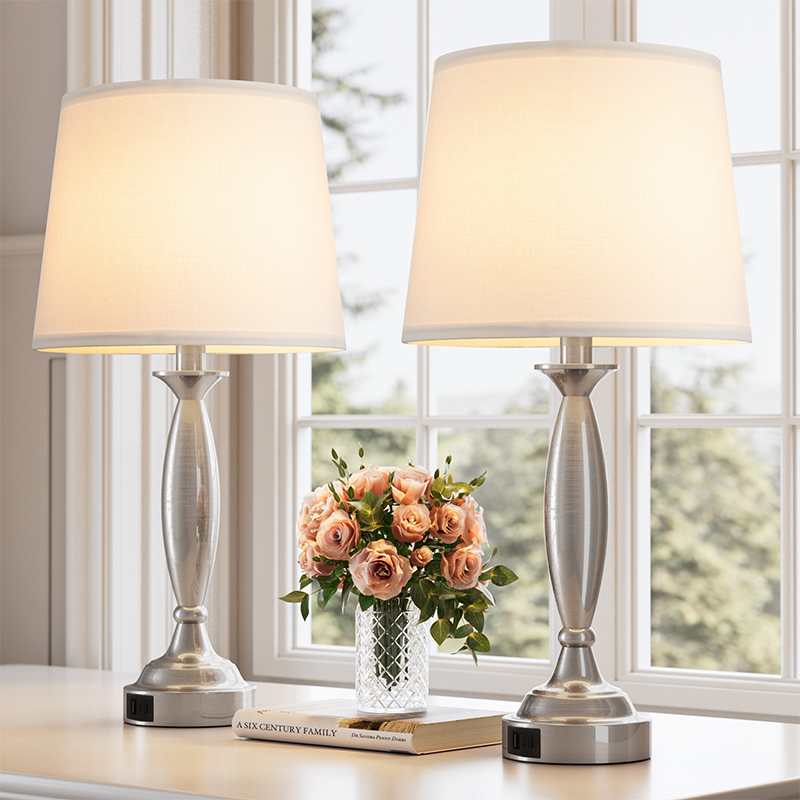
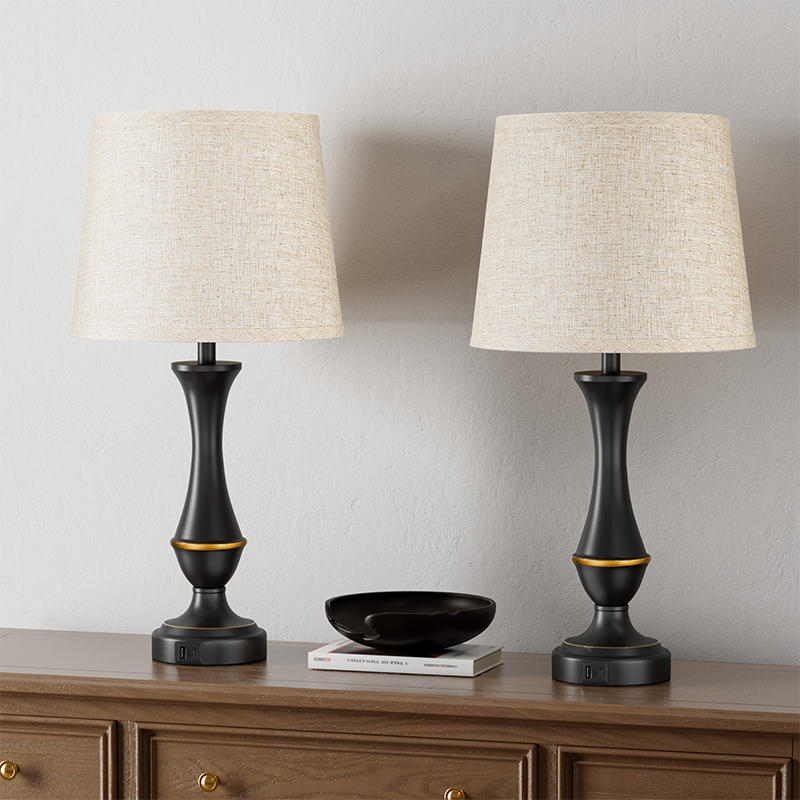


How can a minimalist table lamp maintain heat dissipation and safety without increasing its size?
Release Time : 2026-06-10
Minimalist table lamps, with their core design principles of simple shape, lightweight structure, and low visual interference, are widely used in home, office, and commercial spaces. However, while pursuing a "destructured appearance," the internal LED light source, power driver module, and dimming control system still generate heat. Insufficient heat dissipation design, even with a minimalist appearance, can lead to accelerated light decay, reduced component lifespan, and even safety hazards.
1. Achieving In-Structure Heat Dissipation through Material Thermal Conductivity Optimization
Without increasing volume, the thermal conductivity of the materials themselves becomes crucial. Traditional table lamps often rely on additional heat sinks, but minimalist design emphasizes structural integration. Therefore, high thermal conductivity aluminum alloy is typically used as the main support structure, giving the lamp body the dual function of "structural component + heat sink." By directly mounting the LED light source on the metal substrate and using the aluminum alloy lamp arm or lamp head as a heat conduction path, localized heat can be quickly dissipated to the entire lamp body surface. Compared to concentrated heat dissipation through localized heat sinks, this "full-structure heat dissipation" method significantly improves heat dissipation efficiency without increasing volume, while maintaining a minimalist and unified appearance.
2. Optimized Internal Heat Flow Paths Reduce Heat Accumulation
Besides material thermal conductivity, the design of the heat flow path within the lamp body is equally important. If heat accumulates in localized areas, even with a highly conductive external structure, excessive temperature rise may occur. Modern minimalist table lamps typically employ a zoned internal layout, spatially isolating the LED light source, power module, and control circuitry, resulting in a more even distribution of heat sources. Simultaneously, by optimizing the internal thermal interface material (TIM), thermal resistance is reduced, allowing heat to be conducted more efficiently from the heat source to the outer shell structure. Some designs also utilize hollow structures to create natural convection channels, allowing hot air to rise slowly along the lamp body and release at the top, thus forming a passive heat dissipation cycle.
3. Low-Power LEDs and Intelligent Dimming Reduce Heat Source Intensity
Reducing heat generation itself is also a crucial way to achieve efficient heat dissipation. Minimalist table lamps generally use high-efficiency LED light sources, significantly reducing power consumption at the same brightness output, thus reducing heat generation at its source. Meanwhile, the intelligent dimming system automatically adjusts its output power based on ambient light intensity, avoiding prolonged high-load operation while ensuring lighting needs are met. For example, it automatically reduces brightness at night or in low-light environments, improving visual comfort and effectively reducing heat generation. This "on-demand power supply" further reduces heat dissipation pressure, enhancing system-level safety.
4. Integrated Structural Design Enhances Passive Safety Capabilities
In minimalist design, safety relies not only on heat dissipation but also on structural stability. By encapsulating the power module and isolating it from the metal structure, the direct impact of high temperatures on the circuitry is reduced. The use of flame-retardant materials and insulation layers prevents risks caused by localized overheating. Furthermore, the integrated structure reduces the number of connectors, lowering the probability of poor contact and electrical faults, making the overall system more stable and reliable. Combined with a temperature control protection circuit, it automatically reduces power or cuts off power when the internal temperature exceeds a threshold, further ensuring safe operation from an electronic perspective.
Through optimized material thermal conductivity, thermal path design, low-power light source application, and integrated structural protection, the minimalist table lamp achieves efficient heat dissipation and multiple safety guarantees without increasing size. This design approach not only meets the aesthetic requirements of simplicity, but also provides a more mature engineering solution for modern smart lighting products.
1. Achieving In-Structure Heat Dissipation through Material Thermal Conductivity Optimization
Without increasing volume, the thermal conductivity of the materials themselves becomes crucial. Traditional table lamps often rely on additional heat sinks, but minimalist design emphasizes structural integration. Therefore, high thermal conductivity aluminum alloy is typically used as the main support structure, giving the lamp body the dual function of "structural component + heat sink." By directly mounting the LED light source on the metal substrate and using the aluminum alloy lamp arm or lamp head as a heat conduction path, localized heat can be quickly dissipated to the entire lamp body surface. Compared to concentrated heat dissipation through localized heat sinks, this "full-structure heat dissipation" method significantly improves heat dissipation efficiency without increasing volume, while maintaining a minimalist and unified appearance.
2. Optimized Internal Heat Flow Paths Reduce Heat Accumulation
Besides material thermal conductivity, the design of the heat flow path within the lamp body is equally important. If heat accumulates in localized areas, even with a highly conductive external structure, excessive temperature rise may occur. Modern minimalist table lamps typically employ a zoned internal layout, spatially isolating the LED light source, power module, and control circuitry, resulting in a more even distribution of heat sources. Simultaneously, by optimizing the internal thermal interface material (TIM), thermal resistance is reduced, allowing heat to be conducted more efficiently from the heat source to the outer shell structure. Some designs also utilize hollow structures to create natural convection channels, allowing hot air to rise slowly along the lamp body and release at the top, thus forming a passive heat dissipation cycle.
3. Low-Power LEDs and Intelligent Dimming Reduce Heat Source Intensity
Reducing heat generation itself is also a crucial way to achieve efficient heat dissipation. Minimalist table lamps generally use high-efficiency LED light sources, significantly reducing power consumption at the same brightness output, thus reducing heat generation at its source. Meanwhile, the intelligent dimming system automatically adjusts its output power based on ambient light intensity, avoiding prolonged high-load operation while ensuring lighting needs are met. For example, it automatically reduces brightness at night or in low-light environments, improving visual comfort and effectively reducing heat generation. This "on-demand power supply" further reduces heat dissipation pressure, enhancing system-level safety.
4. Integrated Structural Design Enhances Passive Safety Capabilities
In minimalist design, safety relies not only on heat dissipation but also on structural stability. By encapsulating the power module and isolating it from the metal structure, the direct impact of high temperatures on the circuitry is reduced. The use of flame-retardant materials and insulation layers prevents risks caused by localized overheating. Furthermore, the integrated structure reduces the number of connectors, lowering the probability of poor contact and electrical faults, making the overall system more stable and reliable. Combined with a temperature control protection circuit, it automatically reduces power or cuts off power when the internal temperature exceeds a threshold, further ensuring safe operation from an electronic perspective.
Through optimized material thermal conductivity, thermal path design, low-power light source application, and integrated structural protection, the minimalist table lamp achieves efficient heat dissipation and multiple safety guarantees without increasing size. This design approach not only meets the aesthetic requirements of simplicity, but also provides a more mature engineering solution for modern smart lighting products.